Mianbao Practice Timer: kids stay focused longer and start practice on their own
By Eric Liu· Published · Updated
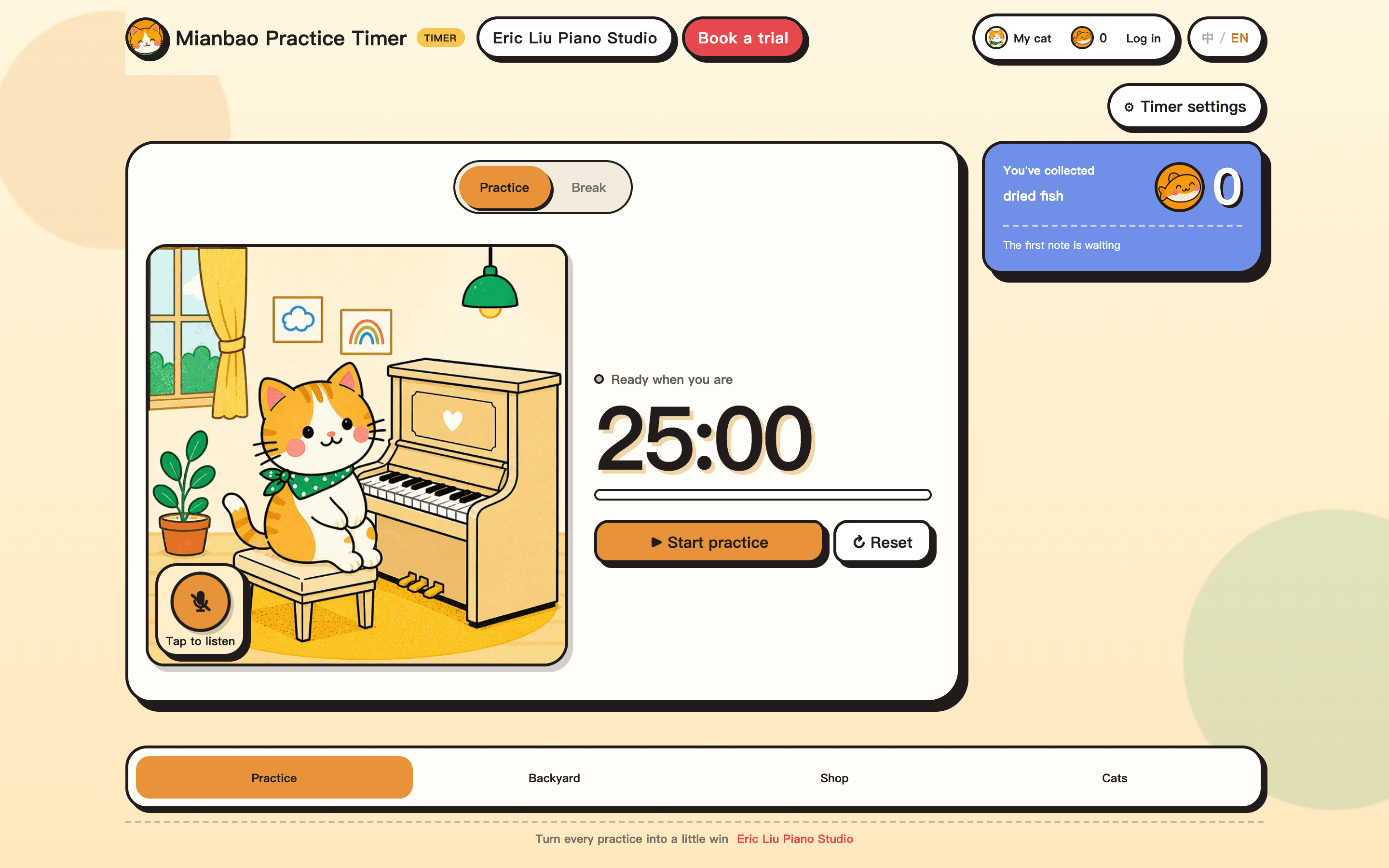
The newest title in the studio warehouse is not another note-name drill. It is a practice clock with a backyard of cats. A child sits down, starts the timer, and the minutes become dried fish. Those fish buy a bed, a plant, a slide — things that make other cats come to visit. Screenshots below are the live game families can open today.
A timer, then a yard of visiting cats
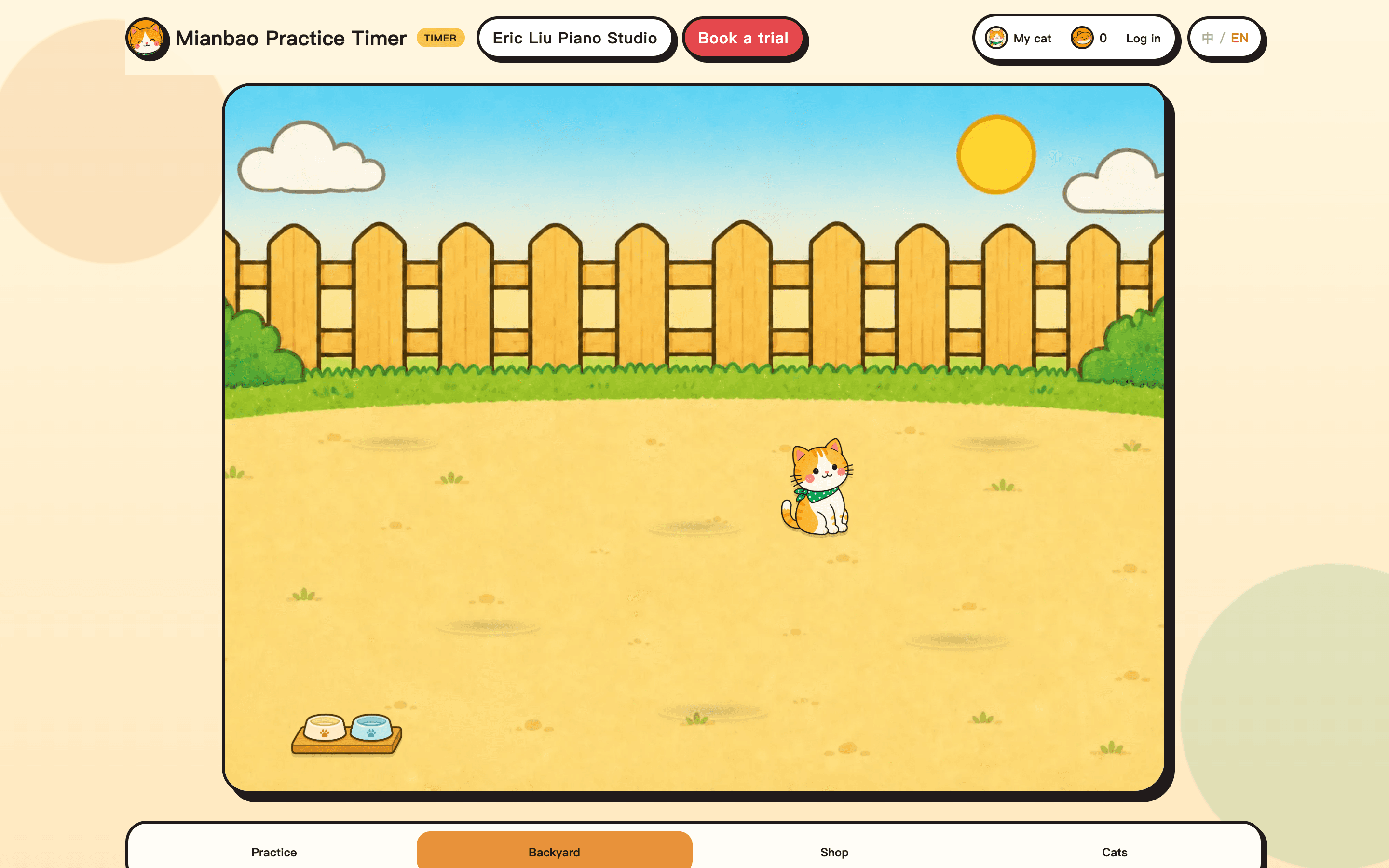
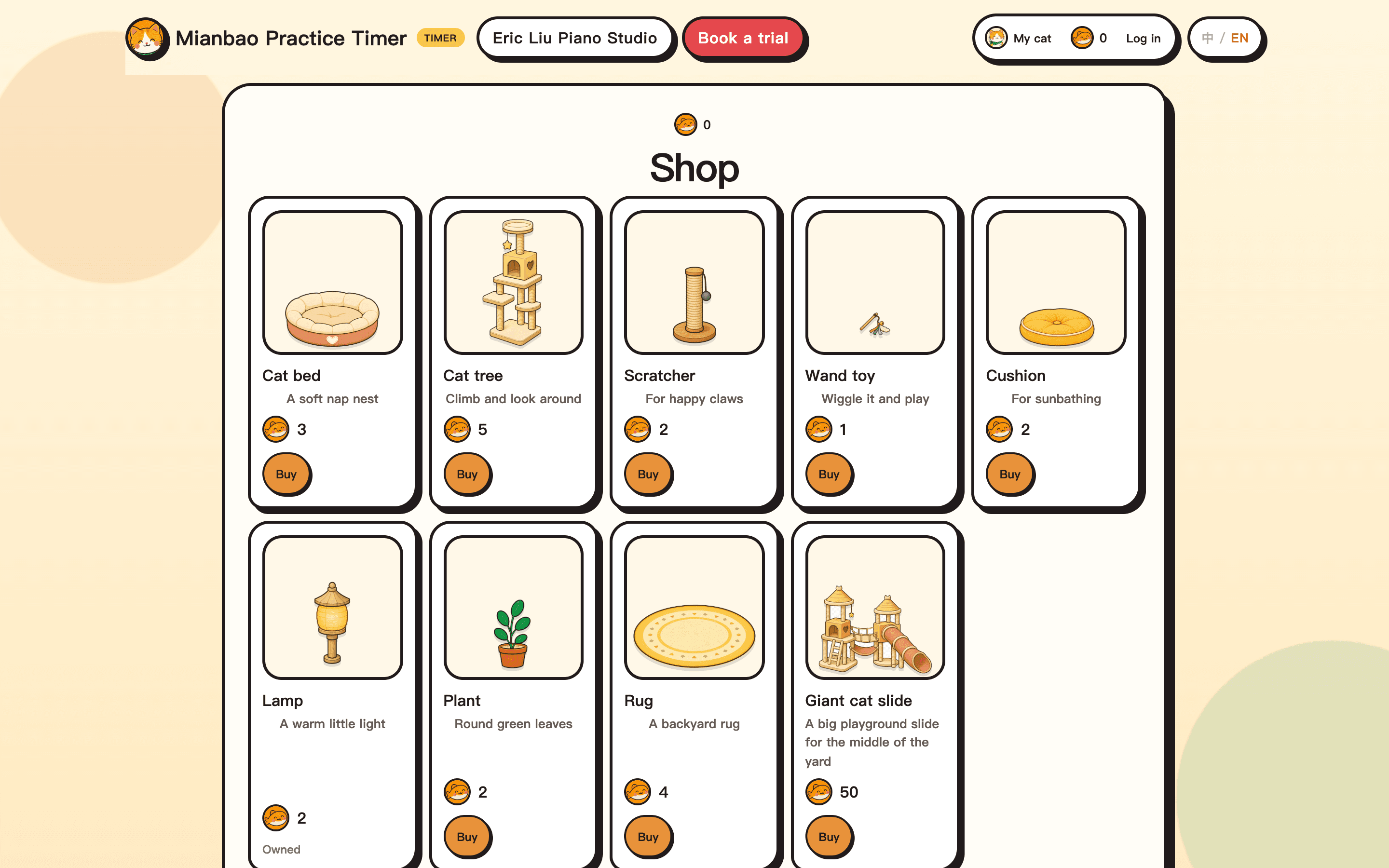
This is a Pomodoro for the piano bench plus a small Neko Atsume-style yard. The child starts a practice block — often twenty-five minutes — and dried fish arrive as the minutes pass. Those fish go to the shop: a bed, a scratcher, a plant, later a giant slide. Items in the yard attract other cats. The loop is simple on purpose. The score is not a high number; it is that the child sat down and stayed.
- Start the timer, then play the assigned piece — not the other way around
- Dried fish come from practice time, not from tapping around the yard
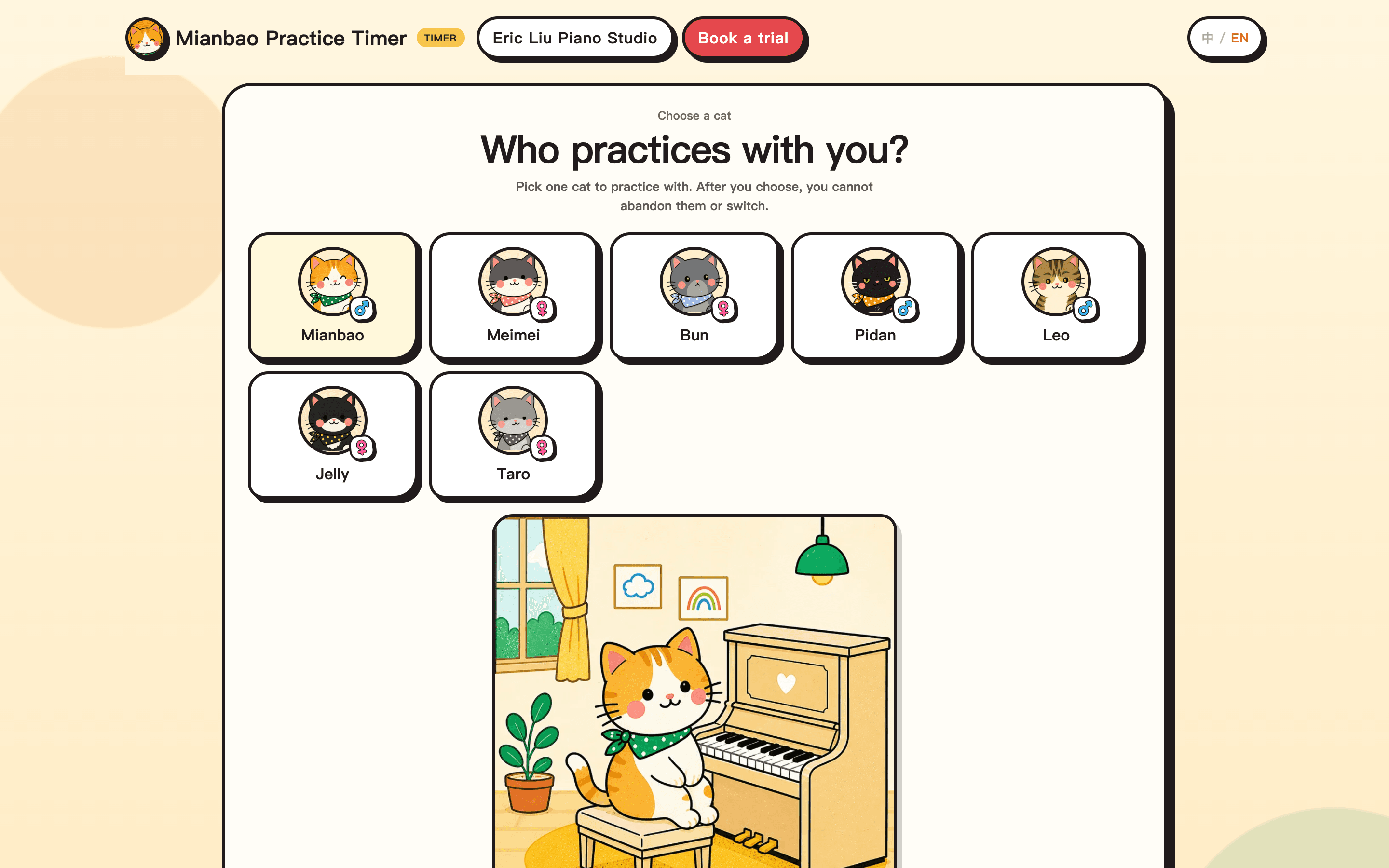
- One adopted cat per student; visiting cats are the reason to come back
What changed in the lesson and at home
This is a studio observation, not a controlled study. After we put the timer in the lesson week, children stayed with the piece longer in the room — focused lesson time increased by about 15 minutes on average, in line with the other short games. The sharper change was at home: parents said the child asked to open the timer and start, instead of being walked to the bench. I treat that as a signal to keep the loop short, not as a promise for every family.
- About 15 extra minutes of focused time in the lesson, on average
- Home practice started more often from the child's side, reported in follow-ups
- The cat is a partner for the assignment — not a second activity that replaces it
How a practice block should look
Open the timer, pick the adopted cat if it is the first visit, turn the sound on, and start. Play the weekly piece while the clock runs. When the block ends, buy one backyard thing if there are enough fish, then close the tab. If the child only wants to rearrange the yard, the block was too long or the assignment was not small enough.
- One timed block, then back to closing the laptop
- Say out loud what the assignment was before hitting start
- Bring one fuzzy bar or one stubborn note to the next lesson
Step by step
How to use Mianbao Practice Timer in a practice week
A four-step routine so the timer and the backyard support the weekly piano assignment instead of replacing it.
Adopt one cat, then start the clock
The first visit, choose a practice partner. After that, open the timer and press start before touching the piece.
Play the assigned piece while it runs
The clock is for the bench, not for browsing the shop. Sound on helps; a microphone is optional and stays on the device.
Spend fish on one backyard item
If there are enough dried fish, buy one thing. Then stop. The yard can wait until the next block.
Bring one question to the next lesson
Write the bar or the note that still collides. Ask it in the private lesson so the timer feeds the 1:1 work.
Open the studio game warehouse
Mianbao Practice Timer is on the same shelf as Beat Game and Who Am I? — name, screenshot, play button.
Continue reading
Try a free lesson
Book a free trial lesson with the studio — no credit card required.
No credit card. Same-day reply on most inquiries.